The first time I truly worried about my marriage wasn’t after a fight, and my husband hadn’t done anything wrong. In fact, it happened on a night that was supposed to be special: our anniversary.
My husband had booked dinner at one of our favorite restaurants. He remembered the table we liked, and even remembered the wine I always ordered. From the outside, everything looked romantic — the kind of night people post about, the kind of night that makes everyone think, “They must still be so happy together.”

But halfway through dinner, I looked across the table at my husband and had a thought that scared me:
“Why don’t I feel anything?”
He was still the same man, with the same smile and the same silly jokes that used to make me laugh. He was still the person I had chosen to build a life with. But somehow, I felt like I was sitting across from someone I loved from a distance.
When we got home, he kissed me goodnight. I smiled, kissed him back, and then turned away. Lying there in the dark, I found myself wondering:
“Is this just what happens after ten years of marriage?”
I Thought My Marriage Was The Problem
Over the next few months, I started noticing just how different I felt. I was tired all the time — not just physically tired, but the kind of tired where even small things felt overwhelming. I became impatient, and things that had never bothered me before suddenly irritated me.
Sometimes my daughter would ask me the same question twice and I would snap at her, only to feel terrible moments later. That reaction upset me because it didn’t feel like me. I had stopped looking forward to things, and even when I finally had time to myself, I no longer seemed to know what I wanted.

I wasn’t exactly sad, and I wasn’t unhappy. I just felt disconnected, as though I were watching my own life from the outside.
The hardest part, however, was what was happening between my husband and me. Things that used to feel natural — a hug, a kiss, a simple touch — suddenly felt different. Sometimes affection felt less like comfort and more like pressure, and intimacy was something I rarely wanted.
At first, when my husband stopped initiating as often, I felt relieved. There was no pressure, no need for excuses, no pretending I was tired. I even thought, “Maybe this makes things easier.”
But then something happened that I wasn’t expecting.
I started missing being wanted.
One night, I moved closer to him in bed and waited, hoping he would reach for me. He didn’t. On another night, he simply said, “Goodnight,” and turned over.
I remember lying there thinking:
“For months, I wanted him to stop trying. Now I’m scared he actually has.”
That was the moment I realized something important: I didn’t want to lose my husband. I just didn’t understand why I no longer felt like the woman who used to want him.
Then I Realized It Wasn’t Only About My Marriage
At first, I blamed everything on us — ten years together, a busy life, work, motherhood, getting older. Maybe this was simply normal. Maybe every long-term relationship eventually became this way.
But then I started noticing changes that had nothing to do with my marriage.
My sleep became terrible. Some nights I would wake up feeling hot and uncomfortable and then spend hours staring at the ceiling. By the next morning, I was already exhausted before the day had even begun.
Then came the changes I didn’t want to talk about: the private ones, the embarrassing ones. There was itching, other changes I couldn’t explain, and eventually a change that made me constantly aware of my own body.
I stopped wearing certain clothes and began avoiding getting too close to people. Whenever my husband came near me, one thought appeared almost immediately:
“Can he notice it too?”
That question made everything harder, because now I wasn’t just tired or disconnected. I was embarrassed.
I Tried To Fix The One Thing I Could Explain
The first thing I tried to fix was the one thing I could actually name: the odor.
I went to my gynecologist and followed the treatments I was given. For a while, things seemed better, but then the problem came back. I tried different approaches — antibiotics, boric acid, probiotics — and each time I found myself hoping, “Maybe this is finally the answer.”
Eventually, though, I stopped feeling hopeful. It wasn’t because I didn’t care. I was simply tired of starting over, tired of searching, tired of wondering what my husband noticed, and tired of feeling as if I had lost a part of myself.
Slowly, I started accepting a thought I hated:
“Maybe this is just who I am now.”
Then A Friend From Malaysia Asked Me One Question
A few weeks later, one of my oldest friends came home from Malaysia for a short visit. We hadn’t seen each other properly in years, but she knew me well enough to notice that something was wrong.
We met for lunch and, at first, everything felt normal. We talked about her life abroad, her work, our children — all the things old friends talk about when they try to catch up on years of life in a single afternoon.
Then she looked at me and asked:
“How are you really?”
It was such a simple question, but somehow it was impossible to answer with, “I’m fine.”
So I told her everything: how tired I felt, how different I felt, how distant I felt from my husband, the changes in my body and the embarrassment I had been carrying around.
Then I finally said something I had never admitted out loud:
“I don’t know if I’m losing my husband… or if I’m losing myself.”
She listened, and then asked:
“Have you ever wondered why you’re treating all of these changes like completely separate problems?”
That question stopped me. She was right. I had separated everything into different boxes: my sleep was one problem, my mood was another, my body was another, and my marriage was another. I blamed stress, age and motherhood, but I had never stopped to ask why so many things seemed to be changing during the same period of my life.

My friend wasn’t trying to diagnose me. In fact, she reminded me that ongoing or concerning symptoms should always be discussed with a qualified healthcare professional. But through her experiences around women’s wellness in Malaysia, she had learned about traditional approaches that were completely unfamiliar to me.
She told me about Malaysian botanicals that had been part of women’s wellness traditions for generations — not as a miracle, and not as a replacement for medical care, but as something women there had long been curious about and incorporated into their routines.
I was curious, but skeptical. I had already tried so many things that I no longer wanted another promise. What caught my attention was that she wasn’t promising me anything at all.
Then she opened the notes app on my phone and typed two names:
Kacip Fatimah.
Manjakani.
I looked at the screen and then back at her.
“I’ve never even heard of these.”
She smiled and said:
“That’s exactly why I’m telling you to research them. Don’t believe me just because I said it.”
That answer stayed with me because there was no pressure, no product sitting in front of me and no promise that everything would suddenly be fixed. She wasn’t asking me to believe her. She was asking me to look for myself.
Just two names.
Two names I had never heard before — and suddenly, two names I wanted to understand.
The Search That Changed The Way I Looked At My Body
That night, after everyone went to bed, I found the note on my phone. For a moment, I thought about deleting it. I had already spent months searching for answers and trying things that didn’t last, and I didn’t want to get my hopes up again.
But curiosity won.
I typed the first name into Google, then the second. One article led to another, then another. Before I knew it, I had stopped searching for a quick fix and started trying to understand the bigger picture.
For months, almost every search I made had sounded the same: “How do I get rid of this problem?” That night, I found myself asking a very different question:
“Why did so many things start changing around the same time in my life?”
That question changed the way I looked at everything. Instead of seeing my sleep, my mood, my confidence, my body and my marriage as five completely separate stories, I started wondering whether I had been missing the larger picture.
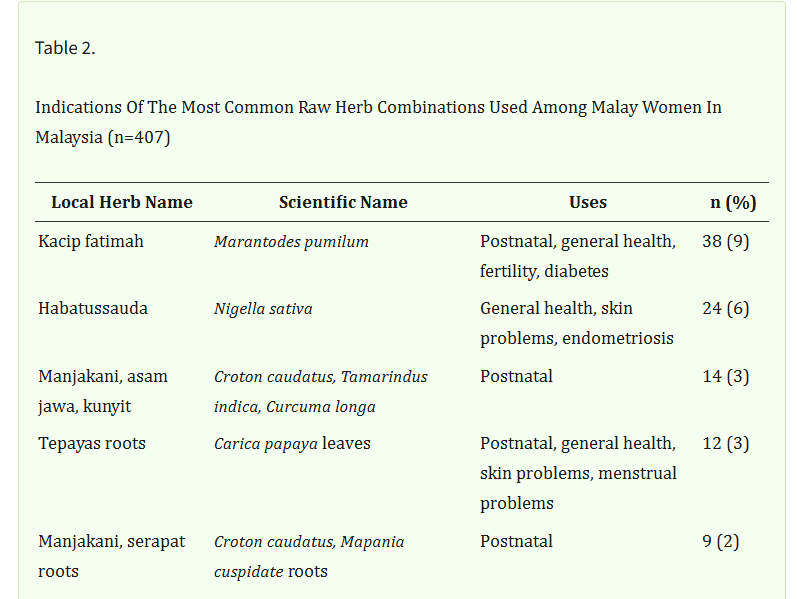
I started reading about traditional Malaysian botanicals, women’s wellness traditions, and the different ways women around the world approached changes in their bodies. The same two names kept appearing in my searches: Kacip Fatimah and Manjakani.
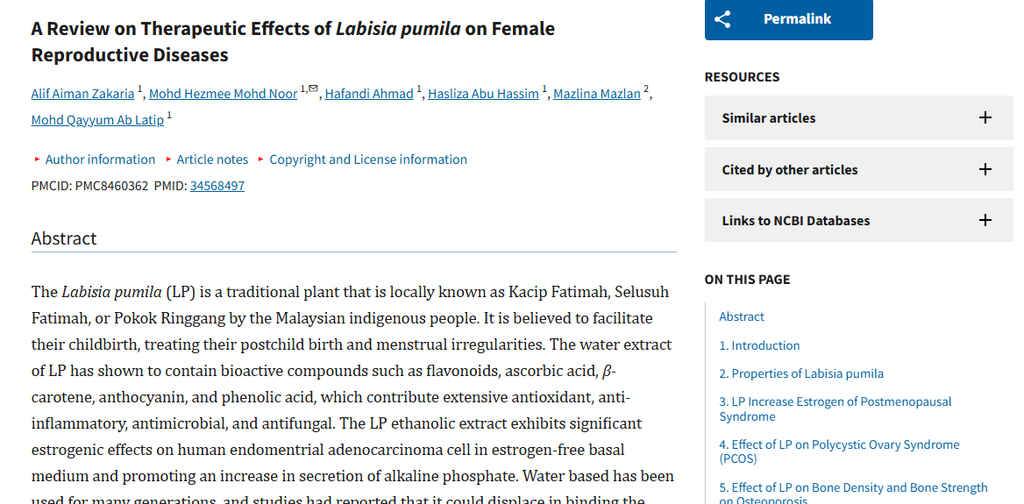
Then, somewhere in that research, I came across something I wasn’t expecting: a women’s wellness formula built around those same botanicals. Normally I would have kept scrolling. By that point, I had become skeptical of almost everything that promised to help women “feel like themselves again.”
The formula was called Megneta.
What made me stop wasn’t the name of the product. It was seeing Kacip Fatimah and Manjakani again — the exact two ingredients my friend had written in my phone before I knew any product existed. I clicked on the page, closed it, then opened it again. I read the ingredient list, searched the names separately, and went back to compare what I found.
I didn’t buy it because I thought I had found a miracle, and I didn’t expect everything to change overnight. I decided to try it because, for the first time in months, I felt curious instead of desperate. I wanted to know what would happen if I stopped treating myself like a collection of unrelated problems and started paying attention to the bigger picture.

The Change I Noticed Wasn’t What I Expected
I thought I would notice a huge difference. Maybe one morning I would wake up and suddenly feel like myself again, or maybe everything would change at once.
But that isn’t what happened.
There was no dramatic moment, no overnight transformation and no perfect day where every problem disappeared. The changes were smaller and quieter — the kind you almost miss because they don’t arrive all at once.
The first thing I noticed was how much less mental space my body seemed to occupy. I wasn’t constantly checking, worrying or wondering what my husband might notice. There were stretches of time when I was simply making dinner, getting dressed or talking to my daughter without that same anxious voice running in the background.
I started laughing more and enjoying little moments again. Slowly, I felt more present, more comfortable and closer to the woman I remembered being.
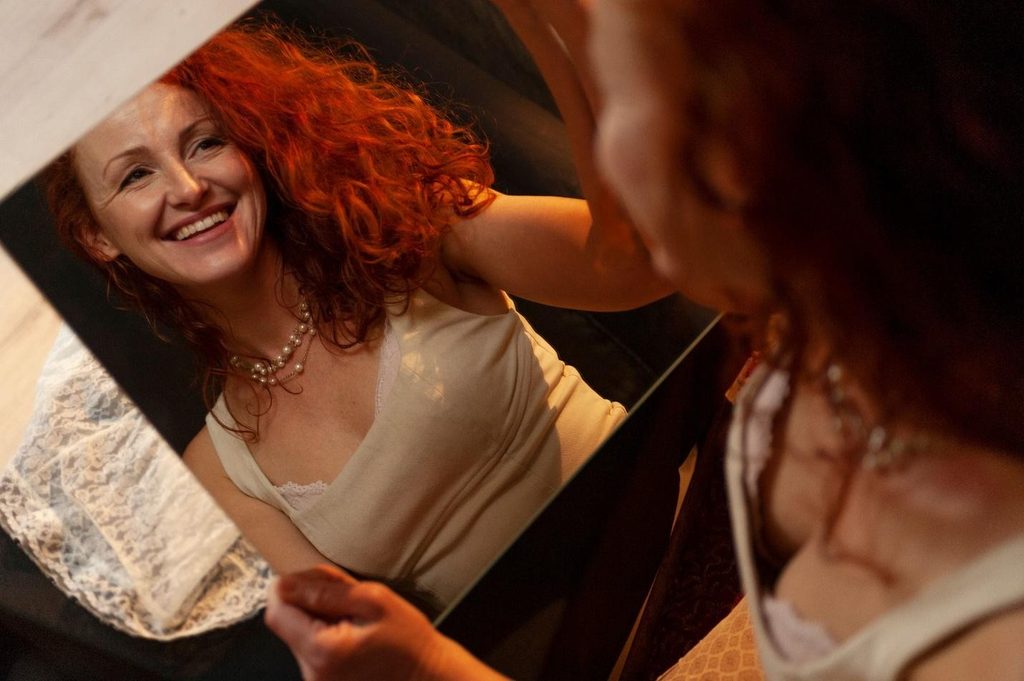
Then one evening, something happened that I will never forget.
My husband was standing in the kitchen making coffee when I walked past him. I stopped, and for a second I didn’t even know why. Then I turned around and hugged him from behind.
He froze for a moment — not because something was wrong, but because he was surprised.
Then he placed his hands over mine.
Neither of us said anything.
But I almost cried.
Because in that moment, I realized that I couldn’t remember the last time I had reached for him first.
For so long, I had been asking myself:
“Does he still want me?”
But I had never asked:
“Do I still feel connected to myself?”
That moment helped me understand what I had really missed. It wasn’t just being desired. It wasn’t just intimacy. It wasn’t even about feeling younger. For months, I had been so focused on whether my husband still wanted me that I hadn’t noticed how disconnected I had become from myself.
What I missed most was something much simpler:
Feeling like myself — and feeling like us again.

I Wish I Had Looked At The Whole Picture Sooner
For months, I thought I had several unrelated problems: a sleep problem, a mood problem, a marriage problem, and a personal problem I was embarrassed to talk about.
Maybe some of them were separate.
Maybe some of them weren’t.
But what I know now is this: I spent too much time blaming myself.
I kept asking:
“What’s wrong with me?”
But maybe the better question was:
“What has been changing?”
Every woman’s experience is different. Changes in the body can happen for many different reasons, and ongoing concerns should always be discussed with a qualified healthcare professional.
But I wish someone had told me sooner not to automatically assume, “I’m over 35, so I guess this is just normal.”
And I especially wish I hadn’t spent so long believing that the distance between my husband and me meant I no longer loved him.
Because sometimes love isn’t gone.
Sometimes we simply become disconnected from ourselves, and when that happens, it can affect the way we experience everything around us.
The two strange names my friend typed into my phone that afternoon sent me down a path I never expected: Kacip Fatimah, Manjakani, and eventually Megneta. What stayed with me most wasn’t the idea of finding a miracle. It was finally asking a better question about what had been changing in my life and my body.
I didn’t start this journey because I was looking for another product.
I started because I wanted to understand my body, my confidence, my relationship and myself — and to make a decision based on what I learned rather than on another promise.
If any part of my story feels familiar — the exhaustion, the distance, the private changes, or simply that hard-to-explain feeling of not quite being yourself anymore — you may understand why those two Malaysian botanicals made me stop and look twice. If you’re curious too, you can look at the Megneta formula below, see what is actually inside it, and learn why Kacip Fatimah and Manjakani were the two ingredients that made me want to research further before deciding for myself.