The first time I truly became scared wasn’t during an argument. It happened quietly… one night in our bedroom.
By a wife of ten years · As told in her own words

I lay there staring at the ceiling, asking myself: “What happened to me?”
The first time I truly became scared wasn’t during an argument. It wasn’t because my husband did something wrong. It happened quietly… one night in our bedroom.
My husband reached over and placed his hand on my waist. It was such a simple gesture. Something he had done hundreds of times throughout our marriage. A small reminder that he was there. That he loved me. That he still wanted to be close to me.
But that night… instead of moving closer… I remember thinking: “Please don’t.”
I pretended to be tired. I stayed still. I hoped he would understand without me having to say anything. Eventually, he turned away. And I lay there staring at the ceiling, asking myself: “What happened to me?”
Because the confusing part was… I still loved him. I knew I did. So why did I no longer want him to touch me? Why did something that once felt natural suddenly feel distant?
For a while, I convinced myself it was normal. We had been married for ten years. We had a child. Life was busy. Work was stressful. I was over 35. Maybe this was simply what happened after years together. That explanation almost made sense. Until I started noticing everything else changing.
I was tired all the time. Not just normal tired. The kind of exhaustion where even simple things felt overwhelming. I became impatient. Little things bothered me. Sometimes my daughter would ask me the same question twice, and I would snap at her. Then five minutes later, I would feel terrible. I would wonder: “Why am I acting like this?”
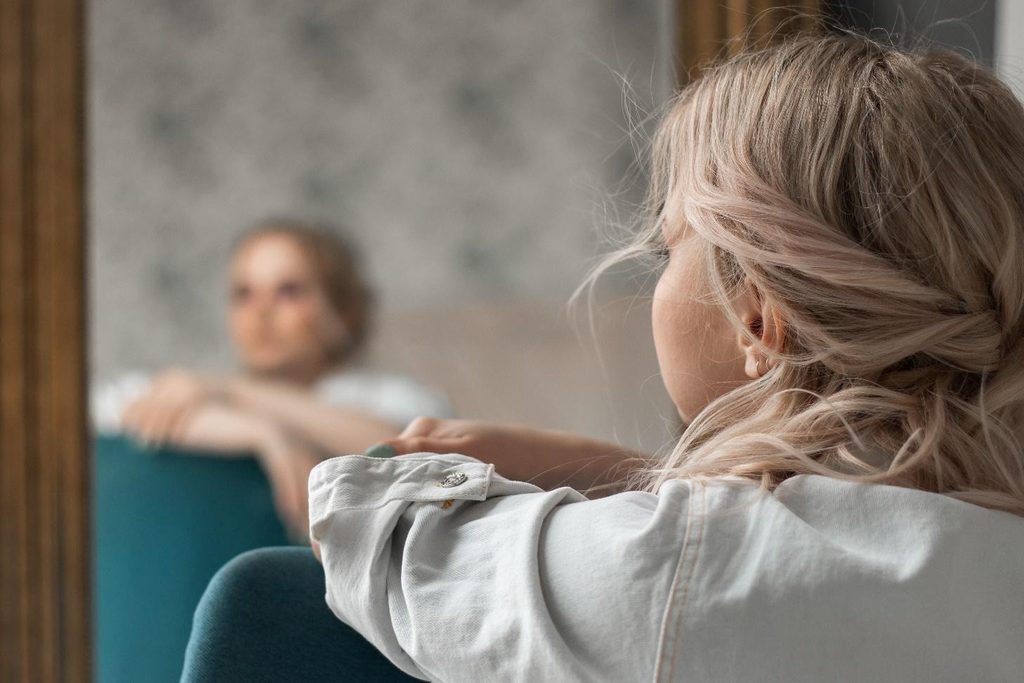
The hardest part wasn’t just the tiredness. It was that I stopped recognizing myself. I stopped looking forward to things. Even when I finally had time alone, I didn’t know what I wanted anymore. I wasn’t exactly sad. I wasn’t unhappy. I just felt disconnected. Like a part of me had gone quiet.
Then my body started changing in ways I didn’t understand. My sleep became restless. I would wake up in the middle of the night feeling hot and uncomfortable. Sometimes I would lie awake for hours. The next morning, I felt exhausted before the day even started.
And then came the changes I didn’t want to talk about. The private ones. The embarrassing ones. Itching. Changes I couldn’t explain. And eventually… a change that made me constantly aware of my own body. That was when everything became harder. Because now I wasn’t just avoiding my husband because I wasn’t in the mood. I was embarrassed. I was worried. I started wondering: “Can he notice?” “Has he already noticed?”
At first, when my husband stopped initiating as often, I felt relieved. No pressure. No excuses. No pretending I was asleep. But that feeling didn’t last. One night, I moved closer to him. I touched his arm. He barely reacted. Another night, I waited for him to reach for me. He didn’t. He simply said goodnight and turned away.
And I remember lying there thinking: “For months, I wanted him to stop trying.” “Now I’m afraid he actually has.” That was the moment the distance no longer felt comfortable. It felt dangerous. I didn’t want to lose my husband. I just didn’t understand why I felt so far away from him.
The first thing I tried to fix was the obvious one. The thing I could actually describe. The odor. I went to my gynecologist. I tried antibiotics. For a while, things seemed better. Then it came back. I tried again. Same pattern. Temporary improvement. Then back where I started. After that came boric acid. Different probiotics. Different things people suggested. Every time, I hoped: “Maybe this is finally the answer.”
Eventually I stopped feeling hopeful. I just felt tired. Tired of checking myself. Tired of wondering what my husband noticed. Tired of feeling like there was a version of myself I couldn’t get back to. I started believing this was just who I was now. Maybe this was what happened after 35. Maybe I simply had to accept it.

One of my closest friends had been living in Malaysia for several years. She came home for a short visit, and we finally sat down together. We talked about her life overseas. Her work. Our children. Then she looked at me and asked: “How are you really?” Not “How is work?” Not “How is the family?” She wanted the real answer.
I said: “I’m fine.” Too quickly. She looked at me. She didn’t say anything. And somehow… that silence was enough. I started crying. Not dramatic crying. Just the kind that happens when you’ve been carrying something alone for too long. I told her everything. How exhausted I felt. How impatient I had become. How disconnected I felt from myself. The changes in my body. The embarrassment. The distance between me and my husband.
And then I finally said something I had never admitted out loud: “I don’t know if I’m losing my husband… or if I’m losing myself.”
She listened. She didn’t judge me. She didn’t tell me what I should do. Then she asked one question: “Have you ever wondered why you’re treating all of these changes like separate problems?”
That question stopped me. Because she was right. I had separated everything. My sleep was one problem. My mood was another. My body was another. My marriage was another. I blamed stress. Age. Motherhood. A busy life. Ten years of marriage. But I had never stepped back and looked at the whole picture.
She wasn’t trying to diagnose me. She reminded me that ongoing or concerning symptoms should always be discussed with a qualified healthcare professional. But through her experiences around women’s wellness in Malaysia, she had learned about traditional approaches to supporting women’s health that were completely unfamiliar to me. Then she opened her phone, went to her notes, and typed two names. Kacip Fatimah. Manjakani.
I looked at the screen. Then looked back at her. “What are these?” She smiled. “Don’t believe me just because I mentioned them.” “Go home. Read about them yourself.” That answer surprised me. No pressure. No promise. No sales pitch. Just two names.

That night, after everyone went to bed, I opened my laptop. For months, every search I made came from desperation. “How do I get rid of odor?” “Why don’t I want intimacy anymore?” “Why am I always tired?” “Is this normal after 35?” This time was different. I wasn’t just looking for something to cover up a symptom. I was trying to understand what my body was telling me.
I searched those two names. Then I started reading. I learned that Malay women have used these botanicals for generations — not as a single “odor fix,” but as part of a wider way of looking at a woman’s body after years of marriage, childbirth, and the quiet changes that come after 35.
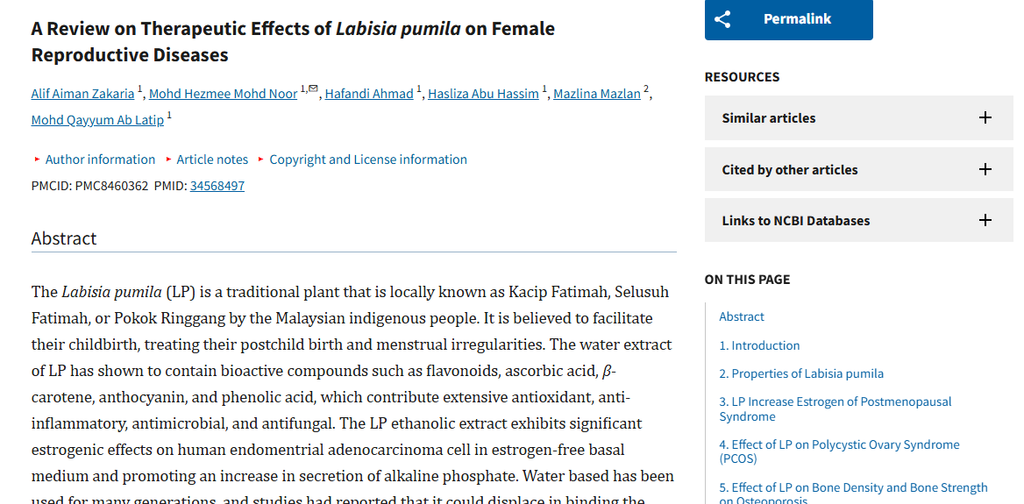
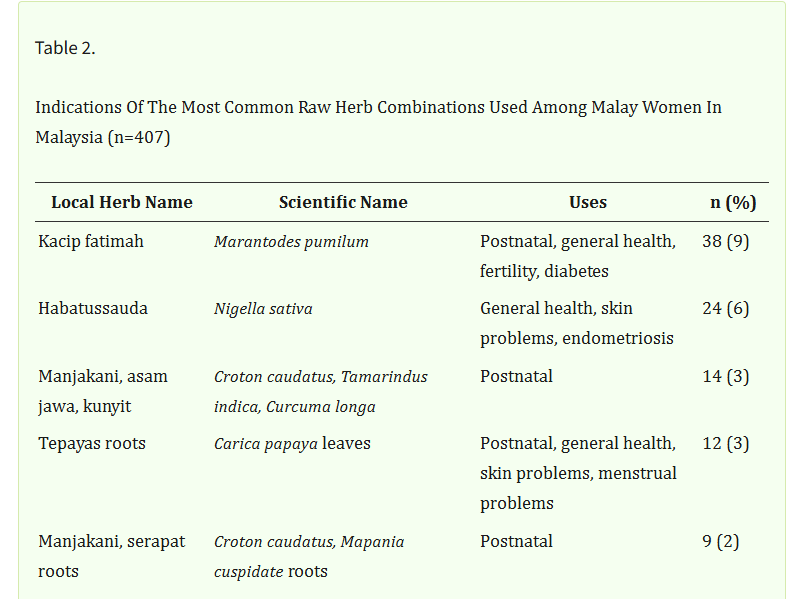
Kacip Fatimah — Labisia pumila — is a rainforest herb traditionally taken by Malay women around childbirth and later life. In that tradition it is used to support vitality, pelvic comfort, and a sense of connection with the body when energy, mood, and desire start to feel farther away. It is not an antibiotic. It is not meant to wipe out one flare and disappear.
Manjakani — the oak gall known in Malaysia as biji manjakani — is used differently. It is valued as an astringent: a plant traditionally used after childbirth and in feminine care because its tannins are believed to help tissues feel more gathered, and to support comfort when discharge, odor, or a constant awareness of the body keeps returning.
That was the piece I had been missing. Antibiotics had treated what could be named in a single visit. They did not explain why the tiredness, the heat at night, the impatience, the embarrassment, and the distance from my husband had arrived together. I had been solving one symptom. I had not been listening to the whole story.
Somewhere in that search I found a women’s wellness formula built around those same botanicals. It was called Megneta. I didn’t buy it immediately. I read. I researched. I came back the next day. I had been disappointed before. I didn’t want another quick promise. But something felt different this time. I wasn’t searching from panic. I was searching from curiosity. Eventually… I decided to try it.
I didn’t wake up one morning feeling like a completely different person. Nothing dramatic happened overnight. The changes were smaller. Quieter. But they were the ones I had actually wanted. I noticed I wasn’t thinking about my body all the time anymore. I felt less self-conscious. I stopped constantly checking. I started feeling comfortable again. More like myself.
Then one night… my husband placed his hand on my waist. The exact same place. The exact same simple gesture. For a second, I remembered that first night. The night I wanted him to move away. But this time… I didn’t pull away. I turned toward him. And I remember thinking: “I missed you.”

That moment meant more than anything. Because I finally understood. I wasn’t falling out of love with my husband. I was slowly losing connection with myself… and I thought that meant I was losing him too.
For months I kept asking “What’s wrong with me?” Now I think the better question was “What has been changing?” Every woman’s experience is different. Changes in the body can happen for many different reasons, and ongoing concerns should always be discussed with a healthcare professional. But if you’re over 35 and suddenly feel like you’re not yourself anymore… don’t immediately assume you’ve stopped loving your partner. Sometimes your body is telling you a story. You just have to learn how to listen.
If you have also lain still and hoped he would understand without you saying a word — look at the two botanicals I found that night, and why I did not buy the formula on the first search.
Below is what I found about Kacip Fatimah, Manjakani, and the Megneta formula built around them — the reading I did before I was willing to try anything again.
This is a first-person account, not a diagnosis. Traditional use is not the same as a medical treatment. Persistent odor, itching, pain, or other concerns should be checked by a qualified clinician before using any supplement.